
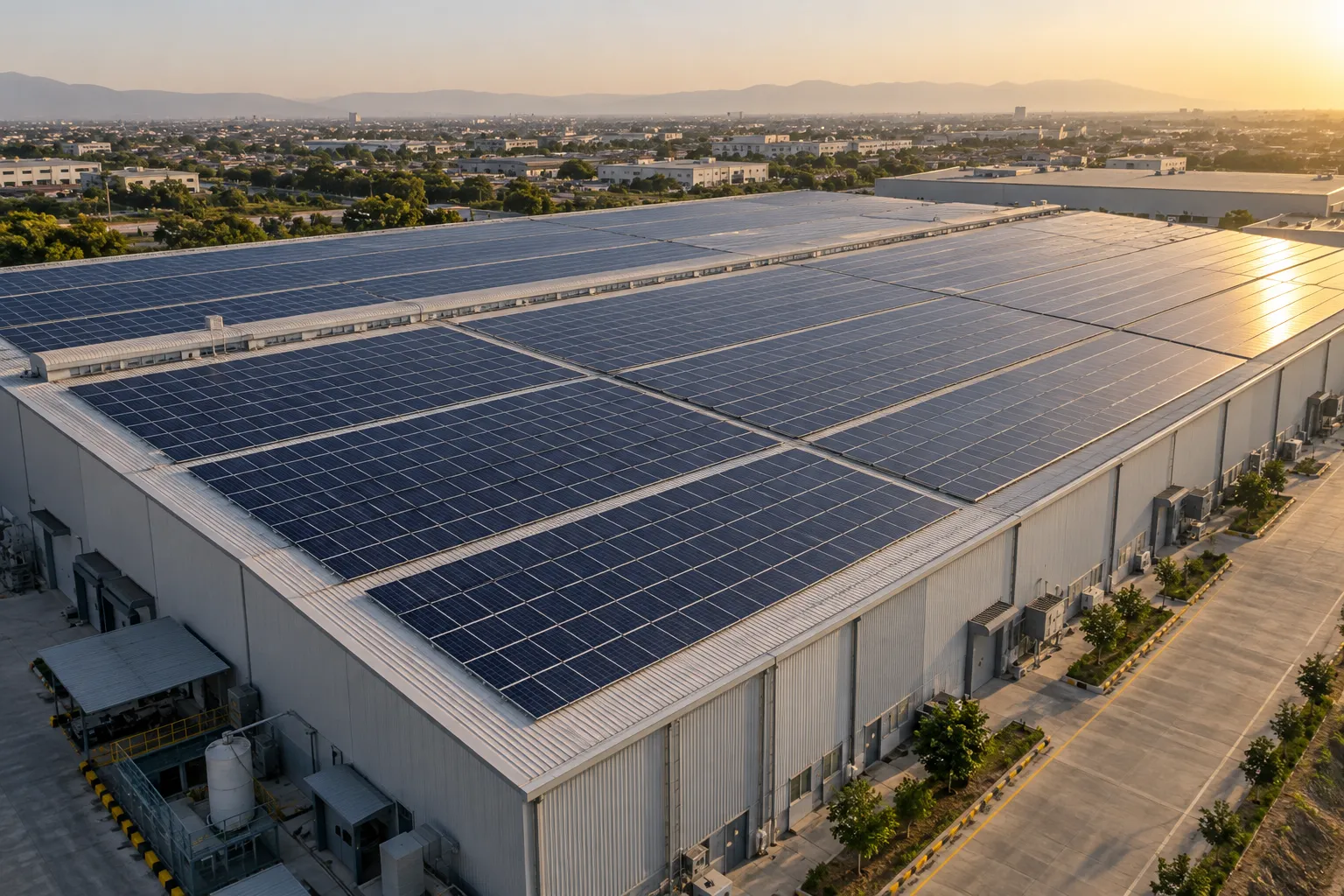
A useful feasibility report makes its assumptions visible and connects the design to your operations.
- OperationsUnderstand the load profile
- EngineeringAssess the site and system
- DecisionCompare scope and scenarios
Begin with the actual load profile
Gather electricity bills, operating hours, and any interval-metering data available. Include weekends, seasonal shutdowns, and future machinery or cooling loads. For a multi-tenant site, clarify which connection and loads the proposal covers.
Ask the designer how the expected solar generation lines up with those operating hours. A large annual generation estimate says little about the portion your business will use directly. Show daytime consumption and expected surplus separately.
Review the roof and electrical scope
The proposal should explain the available layout, access routes, mounting approach, and any structural assessment needed. Discuss roof condition and planned repairs before equipment is installed. Agree how maintenance access and existing services will be preserved.
The electrical scope should identify the connection arrangement, relevant equipment and protection, monitoring, and any planned shutdowns. If the business uses a generator or needs backup, have the designer explain how the proposed system interacts with it.
Ask what is behind the financial comparison
Request an itemised installed cost and a list of exclusions. Separate the assumptions for on-site use, exported electricity, maintenance, and future replacements. If financing is part of the decision, review its terms separately from the solar generation estimate.
Ask to see a lower-generation or lower-self-consumption scenario as well as the base case. A simple payback calculation is an estimate, not a guaranteed result or a full investment appraisal. The assumptions should be clear enough for your own finance team or adviser to review.
Plan for installation and ownership
Agree who approves the design, who coordinates site access, and when disruptive work can take place. Define the commissioning evidence and handover documents you expect. Ask how issues will be logged and who will respond once the system is in service.
RENS provides solar engineering, procurement, and construction services for businesses and industrial sites. A free site survey begins the discussion. The next step is a solution and feasibility report that lets you assess the scope against your operational needs before installation.
About this guide
RENS guides explain solar planning and the questions to ask before installation. General guidance and illustrative examples do not replace equipment instructions, current local rules or a site-specific design.
Spot something that needs updating? Email the RENS team with the guide title and the detail to check.
Sources & further reading
References supplied with this guide. Check the latest rules before making a decision. Overseas consumer guides explain general principles; Pakistan’s connection rules and your equipment instructions take precedence.
Make it specific to your site.
Bring your questions to a free site survey. We’ll discuss your needs and prepare a proposed solution with a feasibility report.
Explore commercial services