Define essential loads
List the lights, communications, appliances, or business equipment you want backed up, including any starting loads.

Build backup around the things that matter. We assess your essential loads, inverter compatibility, and preferred operating approach to plan a suitable battery and hybrid configuration.
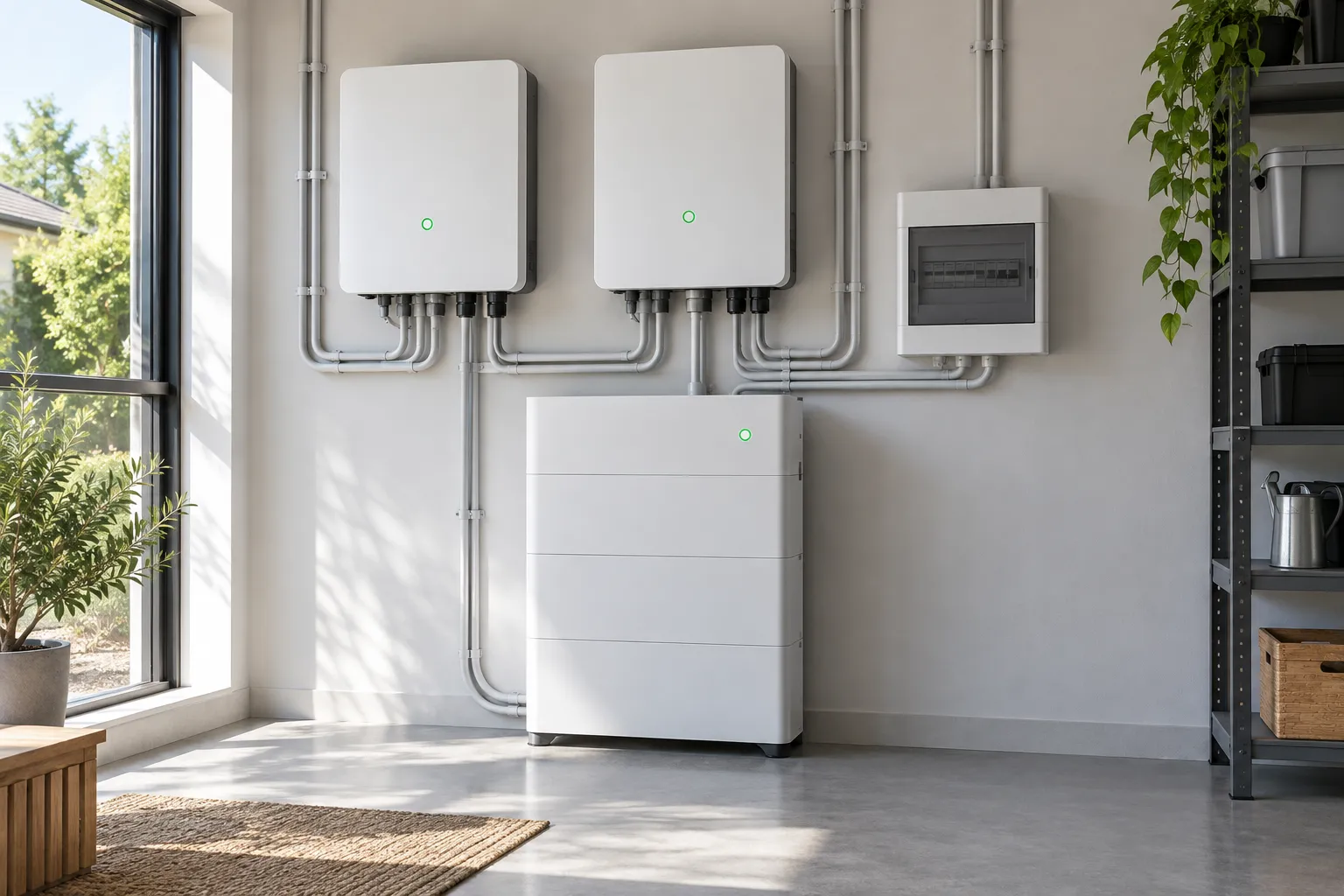 Illustrative imagery · equipment and site layouts vary
List the lights, communications, appliances, or business equipment you want backed up, including any starting loads.
Consider expected load, preferred backup duration, battery operating limits, and the energy available for charging.
Review inverter, battery, communications, protection, and existing electrical-system compatibility.
Identify supported loads and plan the required switching, wiring, protection, and equipment location.
Set up the agreed operating modes and explain battery care, system limitations, and what to expect during an outage.
Bring what you have. The team can help identify anything else needed during the consultation.
Final equipment, deliverables, timelines, warranty terms, and any connection requirements are confirmed in your quotation.
Thinking about battery storage?
Start with the details that matter.
Possibly. We first check the inverter, battery compatibility, electrical arrangement, and available space. Some systems need additional or replacement equipment.
It depends on usable battery energy, connected loads, inverter losses, and operating settings. We discuss a scenario based on your load list rather than promising a universal runtime.
Panels can support charging while sunlight is available, but battery capacity and inverter output limits determine what can be supplied when solar and grid power are unavailable.
From your first call to after-sales care
You should know what happens next.
Here’s how we take your project forward.
We visit your property to check the roof, available space, shading, and electrical setup.
We review your electricity use and listen to what you need, including backup during outages.
We recommend a system and explain the design, expected performance, costs, and assumptions in a feasibility report.
We install the agreed system, test it, and show you how to use it before handover.
You can come back to us for operating questions, maintenance, and service support.